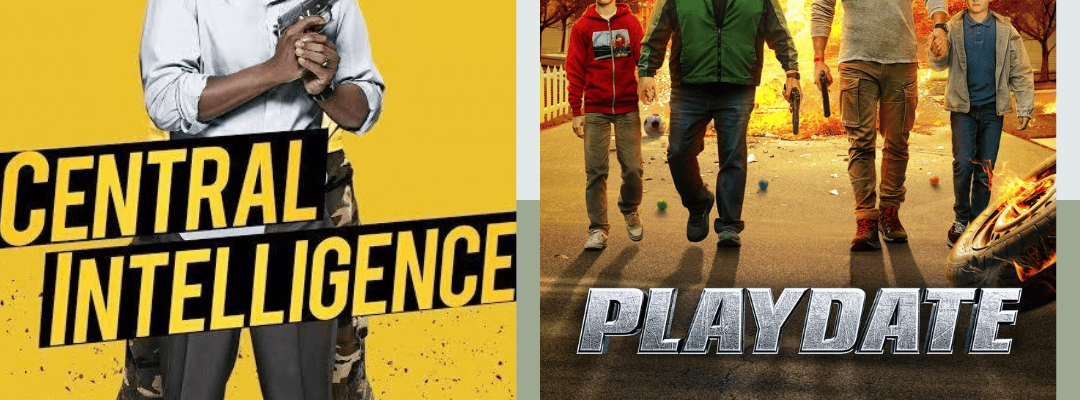
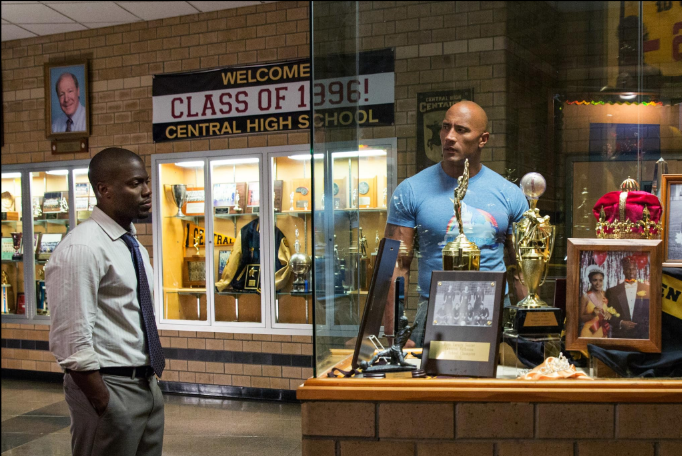
This past weekend, I drove out to my mom’s for some quality time. A family tradition of ours is movie night, where we all gather in the living room with blankets and snacks and a good comedy. Since she couldn’t remember Central Intelligence and my children had never seen it, we put it on and were reminded why we’d loved it so much after the first viewing back in 2016. The Rock’s naive and nonchalant character was just as hilarious this go around, and Kevin Hart’s theatrical performance perfectly balanced that. The comedy was overall clean enough for my teenagers to enjoy as well. By the time the movie ended, we were all laughed out and content with the purposeful action, the well-written storyline, and the wholesome ending.
The next day, we decided to give Playdate a try. We all love Kevin James, but none of us were familiar with Alan Ritchson. The movie started with some relational conflict between a stepdad and his son who was being bullied, which lured us in. Then Ritchson’s character was added and the plot went from 0-100 in the blink of an eye. I found myself pausing the movie to process what was being said and acted out. There was inappropriate language and forced aggression between Jeff (Ritchson) and his son CJ. By about a third of the way in, I was really turned away by the direction the movie had taken. It had opened with a sentimental conflict and progressed into a foul and dishonorable display of behavior. Worse than that, I kept having deja vu, like I’d just watched this movie.
Because I did.
To show the parallelisms between these two films, I’ve simply made a chart.
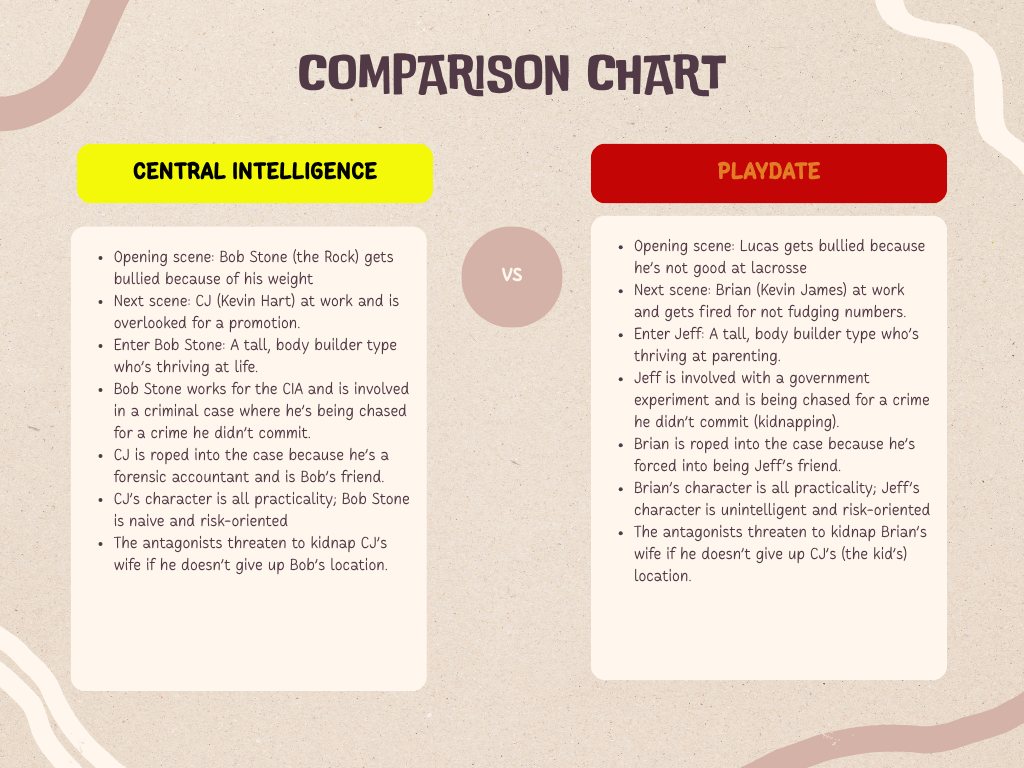
In fictional storytelling, when an original story is used as a basis for another, it’s only fair use if the story is transformative. That means the new work is original enough that it brings something new to the audience, preferably a new meaning. The reason that doesn’t apply to these movies is because so much was copied and pasted from Central Intelligence into Playdate that it’s exactly the same story, just with slightly modified details. From the peak of the wives being threatened to the copying of the characters’ names (CJ).
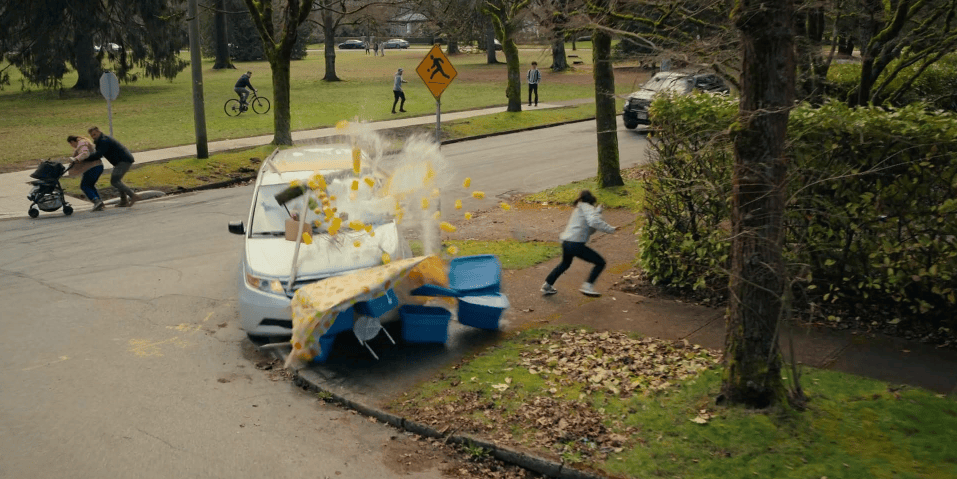
The worse part is that in comparison to each other, Central Intelligence is far better quality than Playdate. The chase scenes in Central Intelligence only damaged property and the main characters. In Playdate, the car chase scene drove through a residential neighborhood with no regard to human life whatsoever. Jeff’s character said that the crosswalk where schoolchildren were actively crossing was “just a suggestion,” and right after that, he nearly drove over a mother pushing her baby in a stroller.
The movie Playdate had the worst display of children I’ve ever seen. The children didn’t honor the adults whatsoever. They were foul-mouthed, disrespectful, and unpleasant to watch.
Playdate also had a significant amount of sexual content that was highly inappropriate for my teenagers, which was odd because the movie was rated PG-13.
Playdate was turned off after Jeff visited his father Gordon because that forced emotional scene was just painful to watch. Honestly, the movie should have been turned off way before that. The characters lacked emotion, the story lacked quality writing, and the entertainment value was nothing compared to Central Intelligence. On Amazon Prime, Playdate is rated 3.4/5 and on IMDB it’s rated 5.5/10, whereas Central Intelligence is 4.6/5 on Prime and 6.3/10 on IMDB.
I can’t guarantee that Playdate was written by AI, but based on how parallel the stories are, I believe it’s safe to say the writer, Neil Goldman, had some help from Central Intelligence.

